
Cartoon Competition Results 2026
We are incredibly proud to recognise every student who submitted an entry into this year’s Economics Teachers’ Association of Western Australia (ETAWA) Economics Cartoon Competition.
With more than 100 entries submitted, the response from our students was outstanding. Tackling the complex and timely topic of oil prices, our students demonstrated a remarkable ability to distil sophisticated economic concepts into creative, thoughtful, and often brilliantly witty visual responses. The ETAWA judging committee noted they were impressed by the creativity on display, the quality of critical thinking, and the depth of explanation students brought to their cartoons.
Creating an economics cartoon is no small feat. It requires students to not only understand the economic concepts at play, but to communicate them clearly and compellingly in a format that is accessible, engaging, and original. Every student who took on that challenge and submitted their work should be proud of what they produced.
A special congratulations to each and every entrant your willingness to engage with economics beyond the classroom is exactly the kind of curiosity and initiative that sets great economists apart.
Please see below our first and runner up places in each division. Keep an eye out for an email to organise your prize!
Year 7
Scarcity and choice: why oil is a scarce resource and how households, firms, and governments make choices about fuel use
 First Place - Thomas (Scotch College)
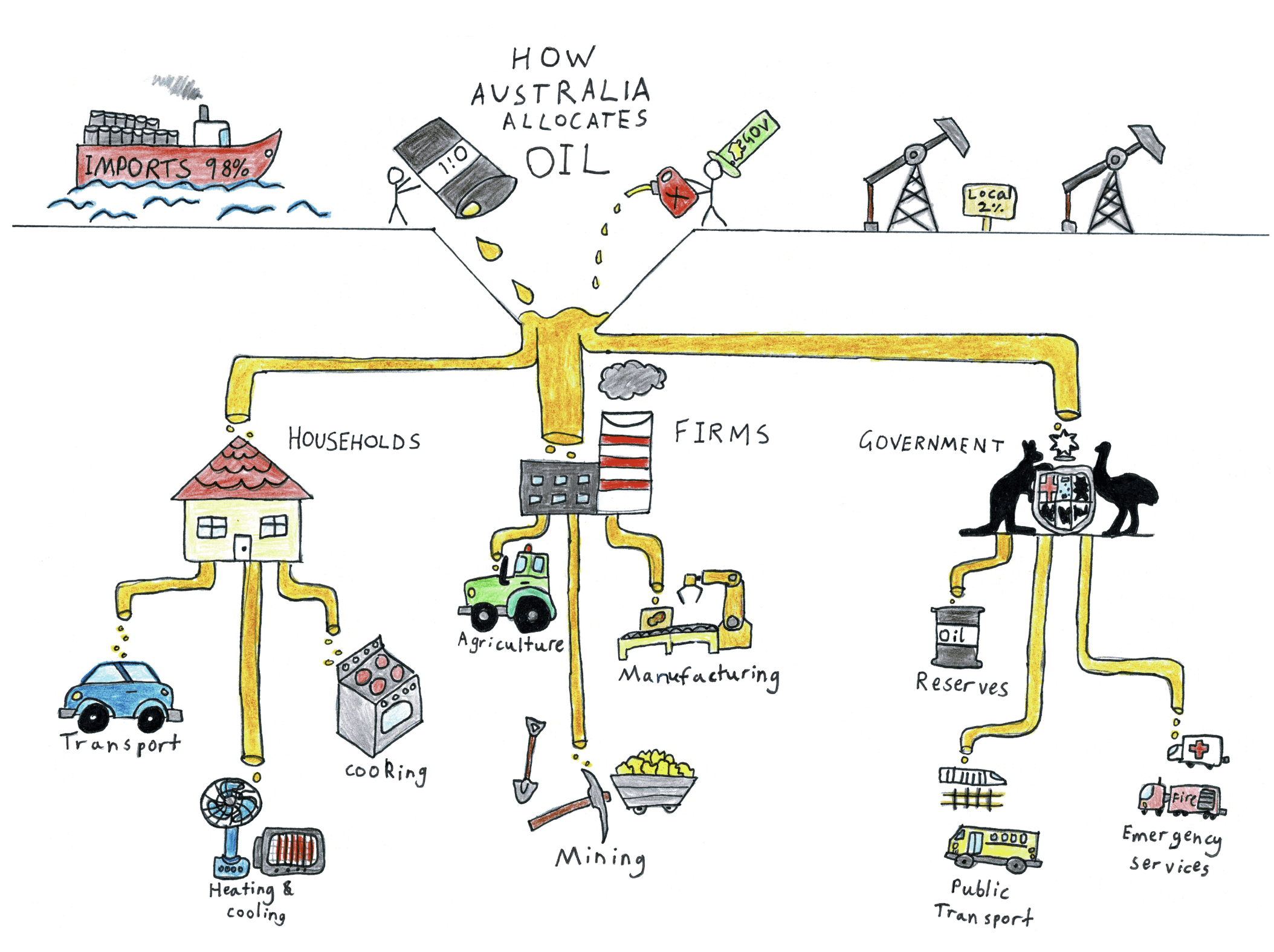
My cartoon shows how the three categories
of consumers in Australia (households, firms and government) rely on imported oil to meet their demands. When oil imports become scarce
the Government prioritises essential services and primary industries that support the overall economy and households. This is represented
by different pipeline sizes.
 Second Place - Daisy (Mount Lawley Senior High School)
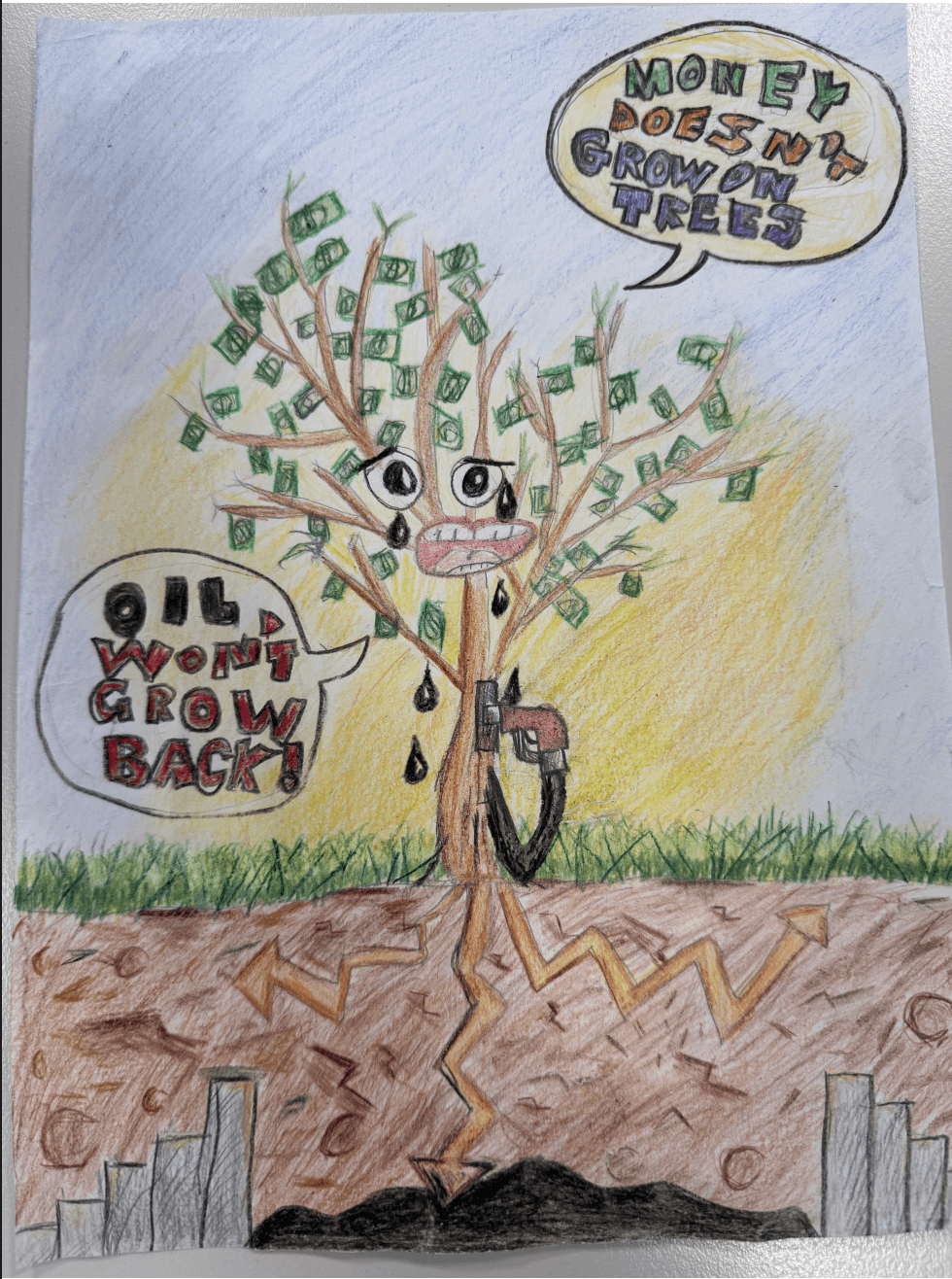
My cartoon shows how the three categories
of consumers in Australia (households, firms and government) rely on imported oil to meet their demands. When oil imports become scarce
the Government prioritises essential services and primary industries that support the overall economy and households. This is represented
by different pipeline sizes.
Year 8
Basic supply and demand: why oil prices rise when demand increases or supply falls
 First Place - Sienna (St Stephen's School Duncraig)
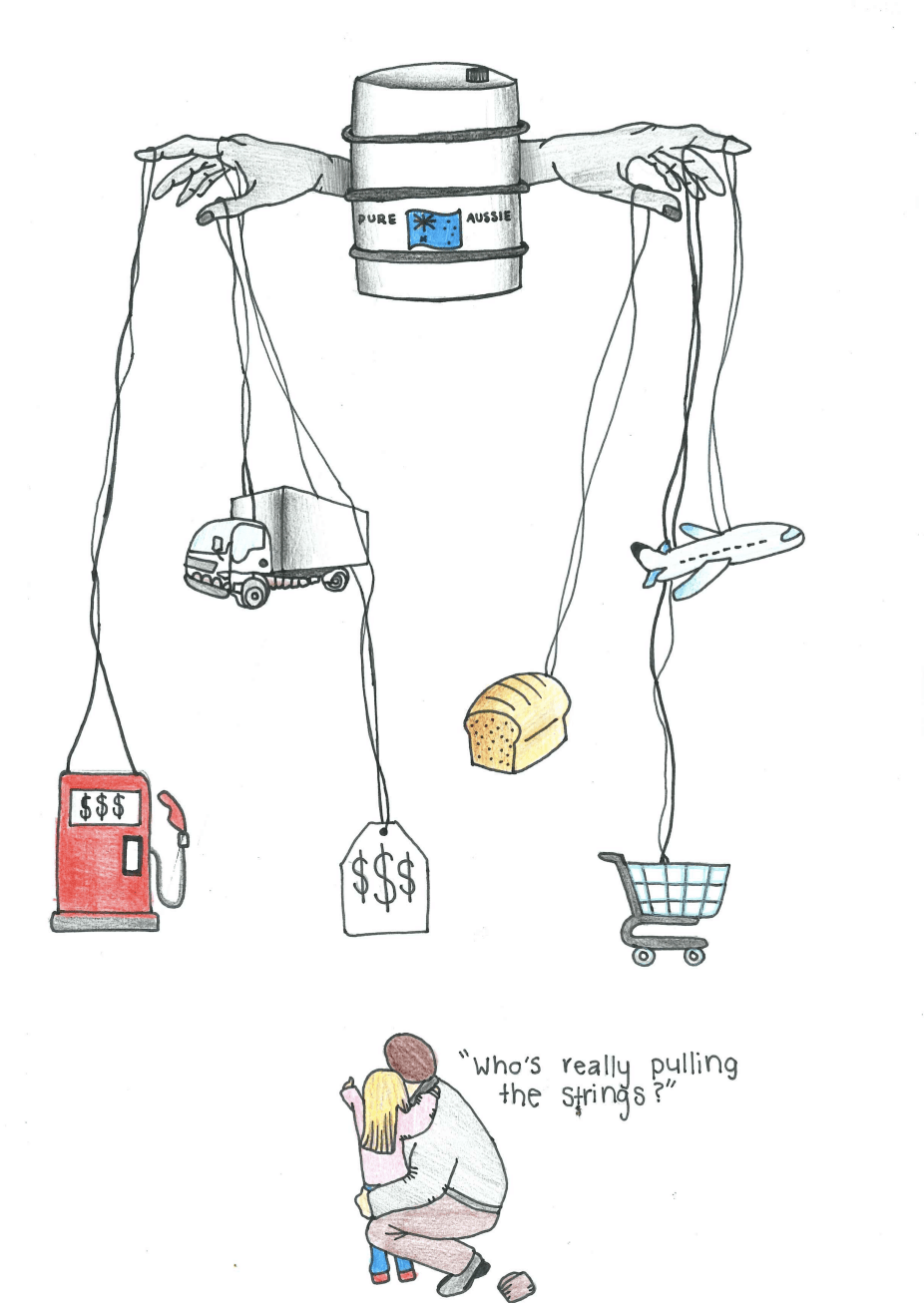
Higher oil prices
influence many industries because oil is a key production input. The puppet strings show fuel costs controlling transport, food, aviation
and shopping. As businesses face higher costs, they pass them onto consumers, causing cost-push inflation across the economy and reducing
household purchasing power over time significantly nationwide.
Second Place - Elena (St Andrew's Grammar School)
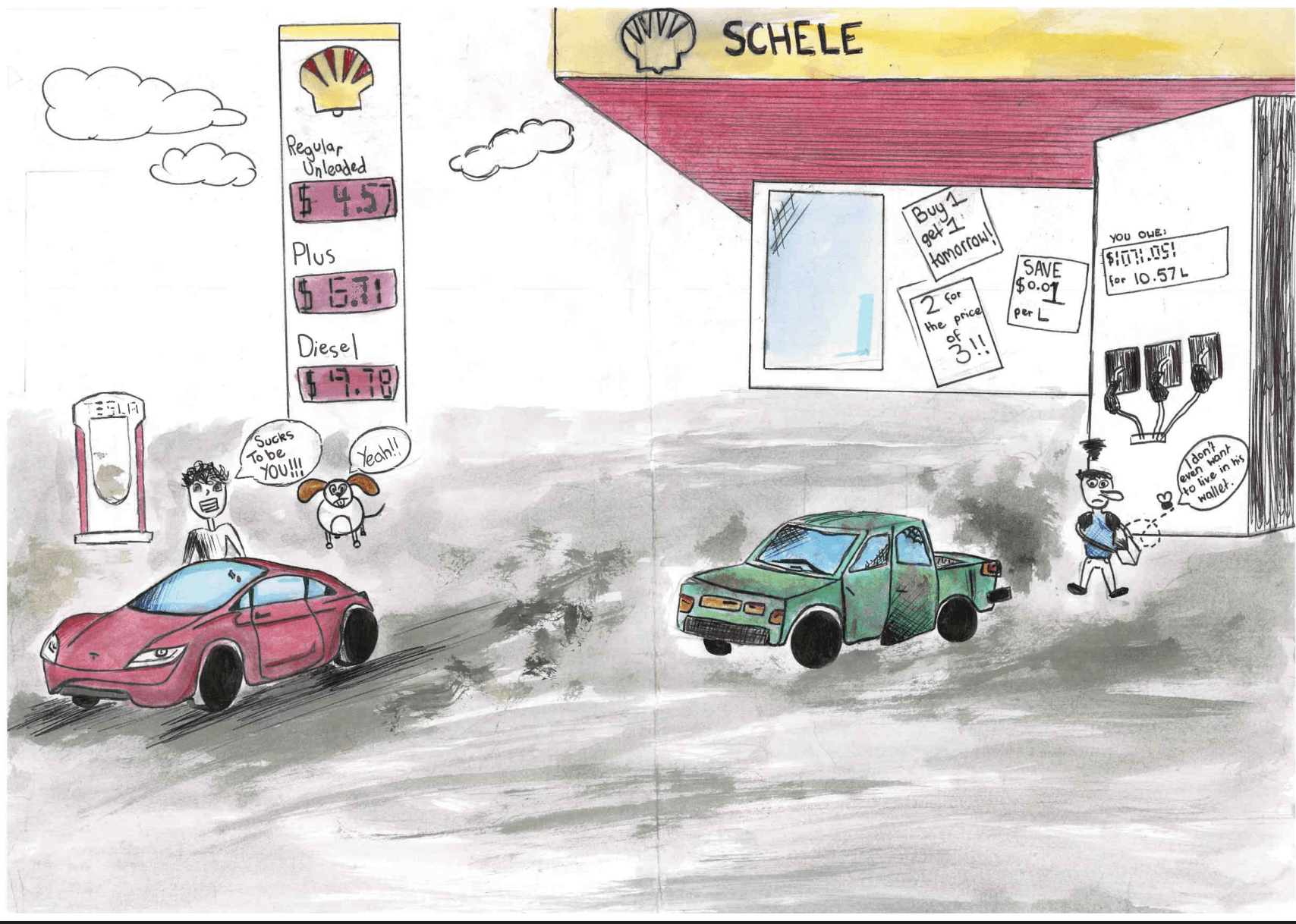
Since oil is currently scarce and very expensive, the guy with the blue t-shirt has ran out of money due to his economy's prices. The
person with the tesla (which is an electric car) doesn't have to pay for petrol and even gets free charging for his car. As you can
see in this photo I would rather be the guy who owns the electric car rather the guy with nothing in his wallet and an old Ute (even the
fly doesn't want to live in wallet).
Year 9
Factors affecting oil prices: global demand, production costs, OPEC decisions, geopolitical events, and technological change
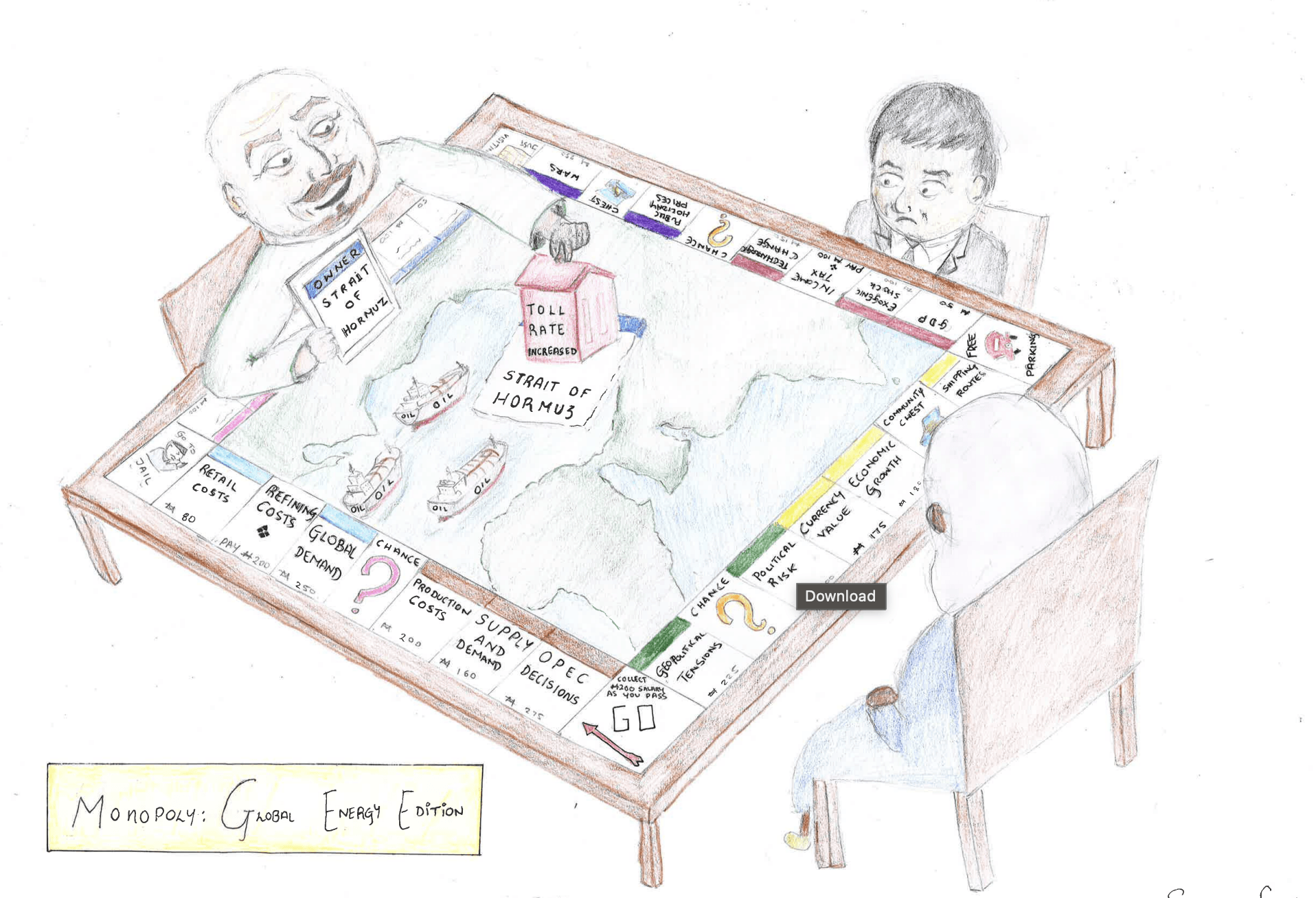 First Place - Suzanne (Providence Christian College)
This cartoon demonstrates how control over the Stratit of Hormuz gives a substantial advantage in the global oil markets. Similar to the
game Monopoly, the owner of a property can raise tolls, thus increasing costs for oil shipments. Around the board, the properties are all
different factors manipulating the prices worldwide, affecting economies everywhere.
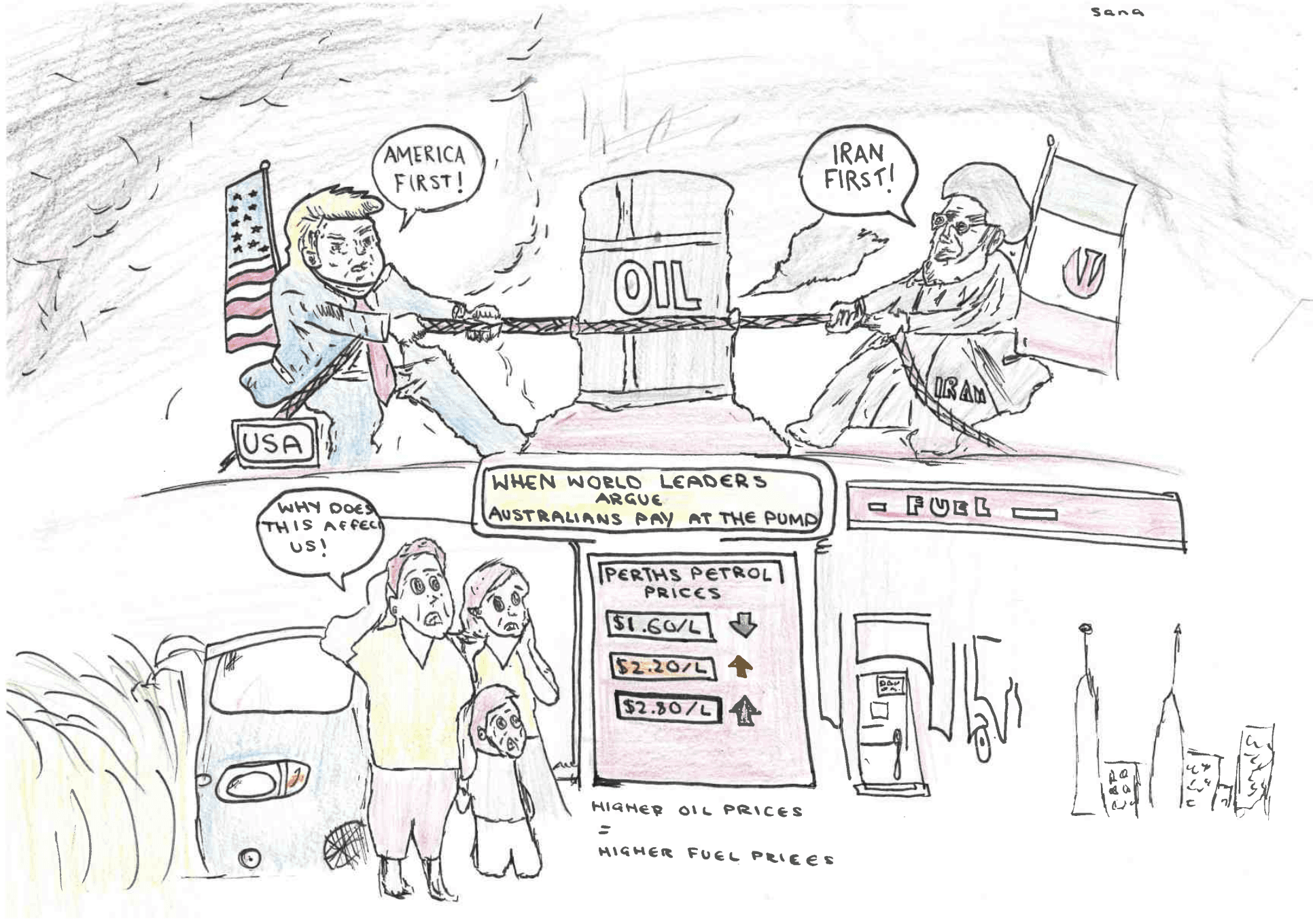
Second Place - Sana (St Andrew's Grammar)
The political cartoon shows that when countries like the USA and Iran argue over oil, can increase around the world. As a result,
Australians have to pay more for petrol, even though they aren't even involved in the conflict. The joke is that Australians pay more
for petrol because of an argument they aren't even apart of.e.
Year 10
Market outcomes and policy impacts: fuel taxes, subsidies, fuel excise, price controls, and environmental regulation
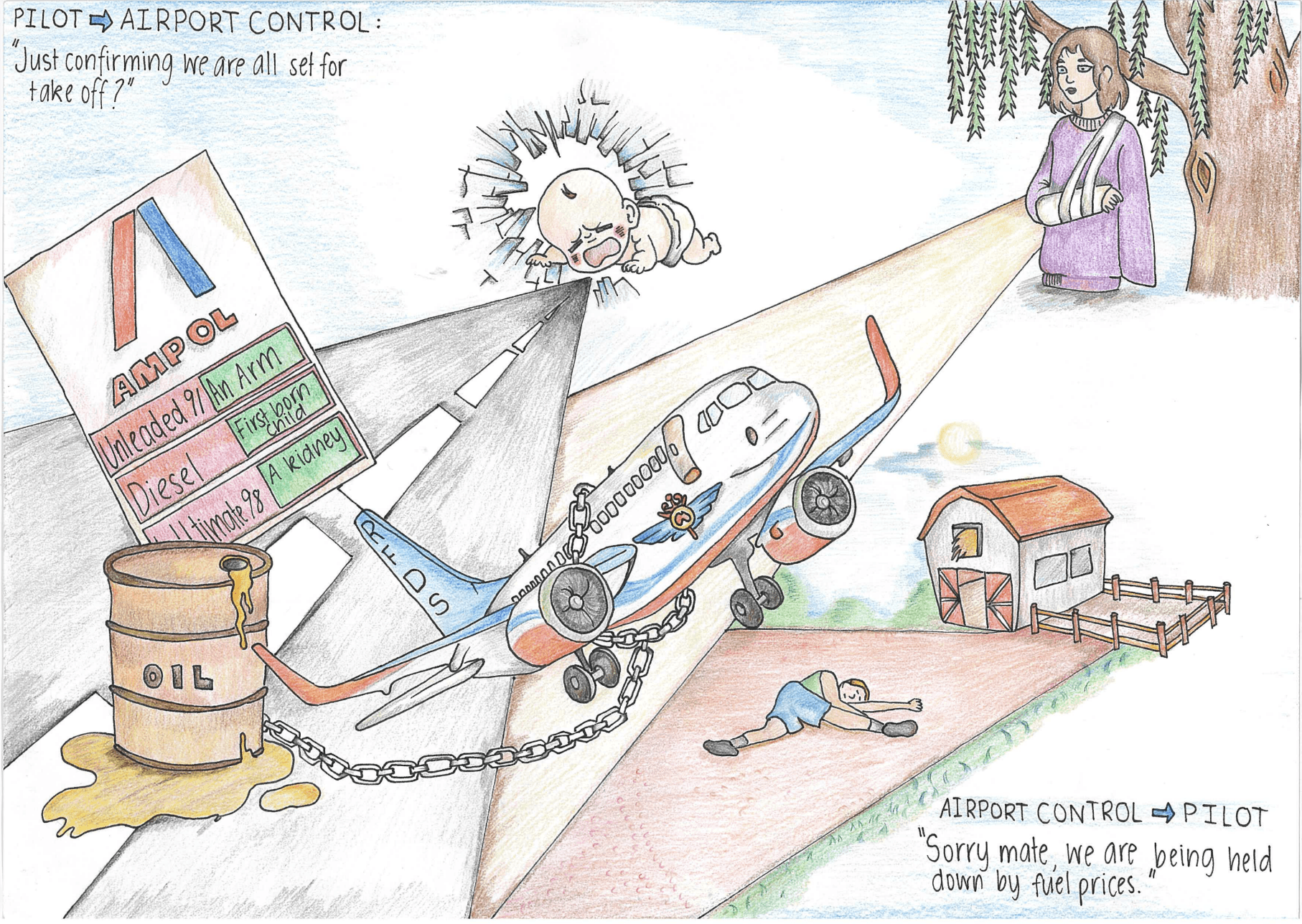 First Place - Lucy (Mount Lawley Senior High School)
The RFDS utilises 12 million litres of fuel annually. The 36.8% rise in crude oil prices since 2025, has resulted in budget reallocation
away from medical equipment and aircraft maintenance. The depiction of the chained plane represents reduced service supply and the fuel
price sign board reflects the potential human cost of the oil crisis.
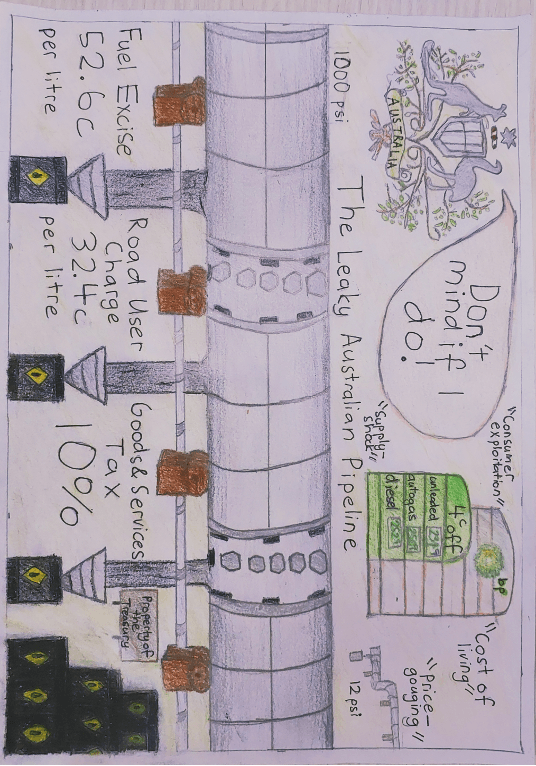
Second Place - Chonu (Perth Modern School
The economic concept that is demonstrated in this cartoon is
that taxation through GST, the Fuel Excise, and the Road User Charge - which flows through the supply chain - are contributing factors to
high fuel prices and consequent cost-push inflation. This is represented by the leaky pipeline, with the oil representing both fuel and
money.